
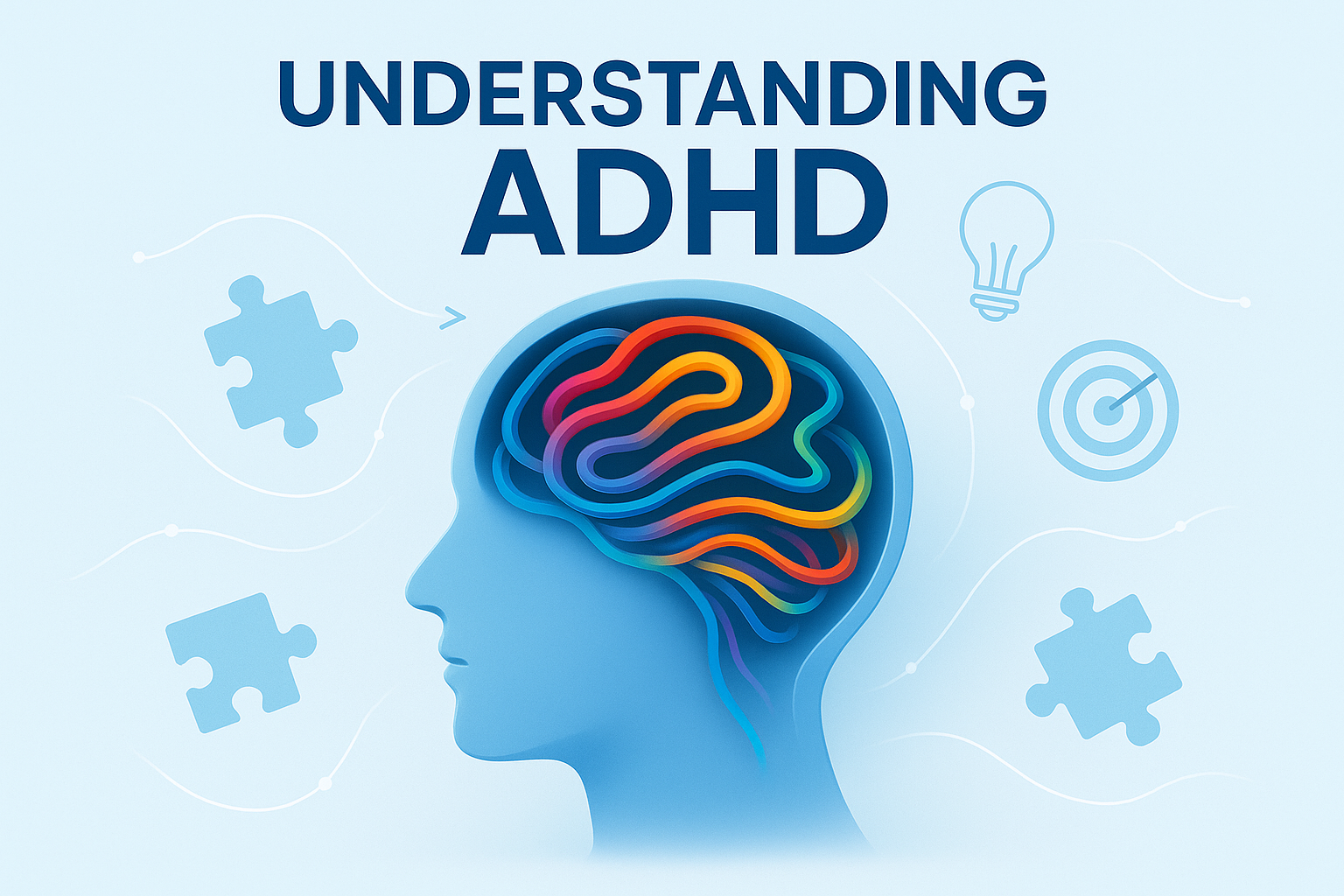
Attention-Deficit/Hyperactivity Disorder (ADHD) is one of the most misunderstood mental health conditions out there. Often dismissed as “just being hyper” or “not paying attention,” ADHD is a complex neurodevelopmental disorder that affects millions of people across all ages. But what does it really mean to live with ADHD?
🚀 What Is ADHD?
ADHD is characterized by persistent patterns of inattention, hyperactivity, and impulsivity that interfere with daily functioning. It’s not just about being easily distracted—it’s about how the brain processes information, regulates emotions, and manages time.
There are three main types:
- Inattentive type: Difficulty focusing, forgetfulness, disorganization.
- Hyperactive-impulsive type: Excessive movement, fidgeting, impulsive decisions.
- Combined type: A mix of both inattentive and hyperactive symptoms.
🧩 It’s Not Just a Childhood Thing
While ADHD is often diagnosed in childhood, it doesn’t magically disappear with age. Many adults continue to struggle with symptoms, though they may present differently—like chronic procrastination, difficulty managing relationships, or trouble staying organized at work.
💡 The Strengths Behind the Struggles
ADHD isn’t just a list of challenges—it comes with unique strengths:
- Creativity: Many people with ADHD are incredibly imaginative and think outside the box.
- Hyperfocus: When something truly captures their interest, they can dive deep and stay locked in for hours.
- Resilience: Navigating a world not built for ADHD brains builds grit and adaptability.
🧘♀️ Managing ADHD: Tools and Tips
Living with ADHD means finding strategies that work for your brain. Here are a few:
- Structure and routine: Consistent schedules help reduce chaos.
- Timers and reminders: External cues can keep tasks on track.
- Mindfulness and exercise: Both help regulate mood and improve focus.
- Professional support: Therapy, coaching, and sometimes medication can make a big difference.

Leave a Reply